

Let’s Build India’s 500 GW Renewable Capacity
Reading Time: 7 min
On average, India experiences 250–300 sunny days with strong sunlight a year and is blessed with a long coastline. And now, we stand at the threshold of a green revolution that could forever reshape our energy landscape.
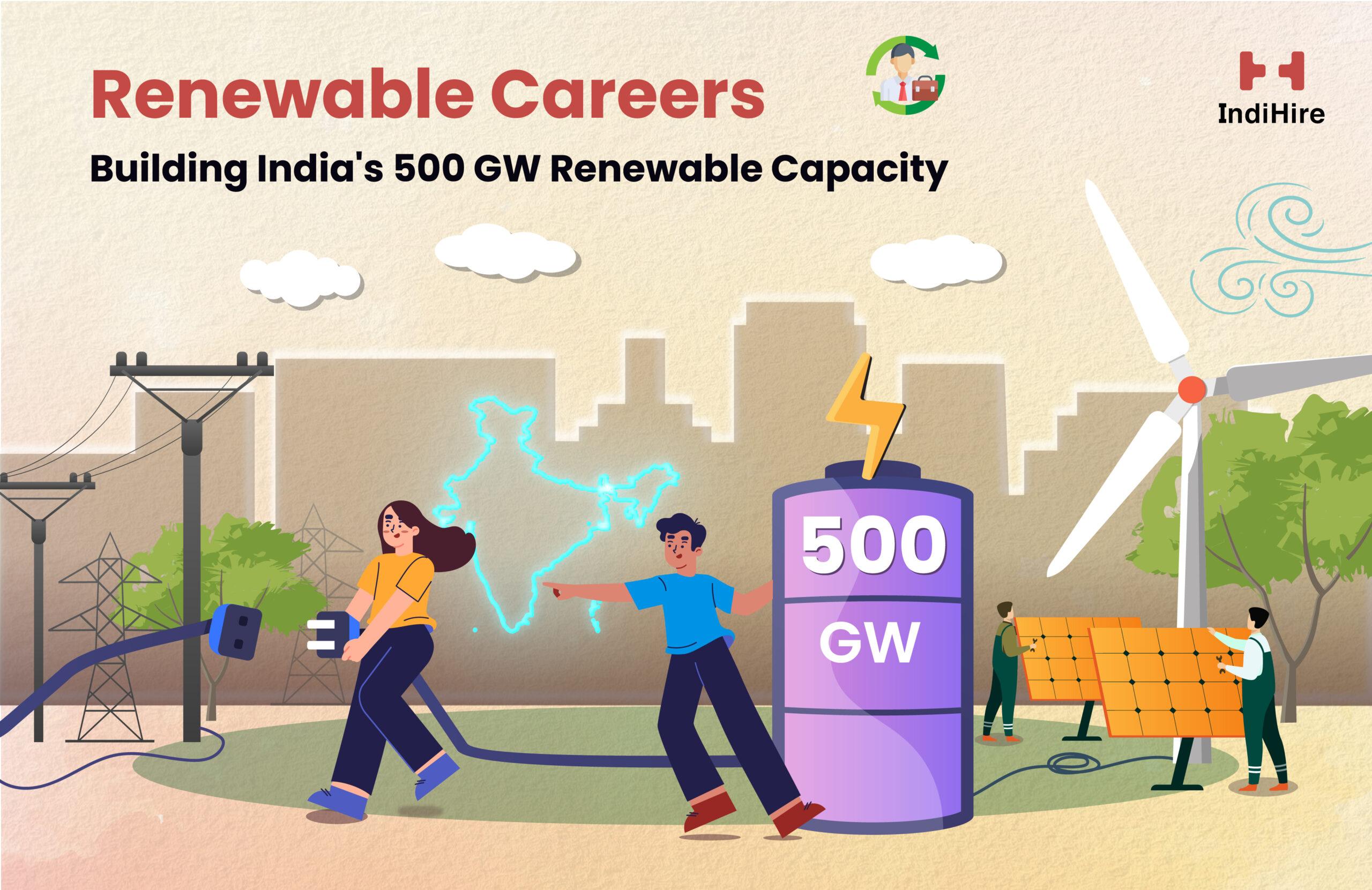
We are not just talking about installing a few solar panels here and there. We are talking about 500 gigawatts of renewable energy capacity by 2030. And the final aim is to produce enough energy from renewable sources to power every home, every business, every dream in this country – sustainably.
But here’s the question that is looming over us as we keep moving forward towards this aim: Who is going to build all this?
The Human Equation in India’s Green Math
Let’s talk about the real thing now. India’s 500 GW renewable energy target is not just about technology or investment – though we need plenty of both. It is fundamentally about Human. Real people with real skills, working real jobs that did not even exist a decade ago.
Right now, we have over 3 million professionals working their magic in the renewable energy sector. Solar technicians in Rajasthan. Wind farm engineers in Tamil Nadu. Energy analysts crunching numbers in Bangalore. It is impressive, sure. But if we are being honest with ourselves, we have a long, long way to go.
We are looking at 2-3 million new jobs by 2030.
That number represents the entire city’s worth of talent we must attract, train, and keep. This is not just another hiring challenge – it is the defining talent challenge of our generation.
Are Traditional Recruitment Playbooks Enough?
Think about it. When was the last time an entire industry needed to double its workforce while evolving continuously? It is like trying to change the engine of a plane mid-flight, except you also need to recruit the engineers to do it, train them on engines that barely existed yesterday, and convince them that aviation is cooler than, say, IT or finance.
The renewable energy sector faces an unusual problem. We need experienced professionals who do not exist yet. We need specialists in technologies that are still evolving. We need innovators for challenges that are not identified yet.
So, what do we do? We get creative.
The Skills That Will Build Tomorrow’s Grid
Let’s talk about what your talent pipeline needs to look like. Not in five years, but right now.
The Technical Backbone
Obviously, we need engineers. But not just any engineers. We need electrical engineers who understand grid integration, mechanical engineers who can optimize turbine efficiency, and civil engineers who know how to build solar farms that can withstand everything from sandstorms to cyclones.
Then there are the emerging specializations: energy storage experts (because the sun does not shine at night), smart grid specialists, and IoT professionals who can make renewable installations communicate with each other like a black-ops team.
The Data Wizards
Renewable energy is becoming a data game. Wind patterns, solar irradiance, consumption forecasts – it all generates massive amounts of data. We need data scientists and AI specialists who can turn this information into actionable insights. Can your turbines predict their own maintenance needs? Can your solar farm anticipate tomorrow’s output? That’s the future we are hiring for.
The Project Orchestrators
Building a 50 MW solar park is not like putting together furniture from IKEA. We need project managers who understand both the technical complexities and the regulatory maze. Add to that the land acquisition specialists, the environmental consultants, and the community officers who ensure projects do not just get built – they get built right.
The Financial Navigators
Money makes the world go round – the same goes for the renewable world. We need financial analysts who understand green financing, policy experts who can navigate subsidy structures, and business developers who can spot opportunities before the competition does.
The Maintenance & Improvements Geniuses
Generating renewable energy is not – install and forget. We need people who can keep them running efficiently. We need solar experts who know the installations inside out. We need wind farm geniuses who can keep them running as seasons change. They need to understand the nuances of these installations and continuously make adjustments, reducing downtime and boosting output.
The Hidden Talent War in Renewables
Here’s an uncomfortable truth: you are not just competing with other renewable energy companies. You are competing with tech giants offering bean bags and free lunch, consulting firms promising global exposure, and traditional energy companies showcasing bulky paychecks.
Your secret weapon? Purpose.
Gen Z and millennials – the talent pool you are fishing in – actually care about what their work achieves. They want to tell their friends they are fighting climate change, not just optimizing profit margins. Use that. Your recruitment messaging should scream impact, innovation, and importance.
But purpose alone will not pay the bills. Compensation packages need to be competitive, career progression paths need to be clear, and work environments need to be engaging. Think about flexible work arrangements, continuous learning opportunities, and leadership that actually listens.
Building Bridges to Tomorrow’s Workforce
Want to know the smartest thing you can do right now? Start recruiting from colleges and universities that have never been traditional renewable energy feeders. That commerce graduate with a passion for sustainability? Train them for business development. That arts student who aced environmental studies? Perfect for policy and advocacy roles.
Partner with educational institutions to shape curricula. If the skills you need do not exist in the market, help create them. Set up internship programs, sponsor research projects, and build relationships with professors who influence young minds.
And most importantly, look beyond engineering. The renewable sector needs communicators, designers, lawyers, and more. Diversity is not just politically correct – it is strategically brilliant.
The Integration Challenge
Now, let’s talk about skill gaps. Your new hires will never know everything. Nobody knows everything in a sector that’s evolving this rapidly. Build robust onboarding programs. Create mentorship frameworks where experienced professionals guide newcomers. Foster a culture where asking questions is not just acceptable – it is encouraged.
Cross-functional training should be standard. Your solar engineer should understand wind basics. Your financial analyst should know the difference between monocrystalline and polycrystalline panels. This creates a workforce that’s not just skilled but versatile.
The Innovation Imperative
What do you think is the difference between companies that will lead India’s renewable revolution from those that will watch it happen: INNOVATION CULTURE. Are you creating an environment where people can experiment? Where failure is a learning opportunity rather than a career death sentence?
The 500 GW target is not just about doing more of what we are already doing. It is about doing things we have not imagined yet. Your recruitment should seek out unconventional thinkers, problem-solvers who see challenges as invitations, and dreamers who are also doers.
The Road Ahead
Think about your role in all this for a second. Every hire you make, every career you help shape, every team you build – it is a brick in the foundation of India’s energy independence. It is a step toward cleaner air for our children.
India’s 500 GW renewable capacity goal is not just ambitious – it is necessary. Climate change is not waiting for us to figure out our recruitment strategies. But here’s the beautiful part: we have got everything we need to succeed. We have the ambition, the natural resources, the growing infrastructure, and increasingly, the political will. What we need now is talent – the talent architects – to complete the puzzle.
What’s your strategy? How are you going to attract the brilliant minds we need? How will you convince a software engineer that renewable energy is where the real action is? How will you retain talent in an industry notorious for poaching?
Because India’s green future? It is not being built by technology alone. It is being built by people.


© 2026 IndiHire.