

The Remote Leadership Playbook – Essential Skills for Managing Distributed Teams
Reading Time: 7 min
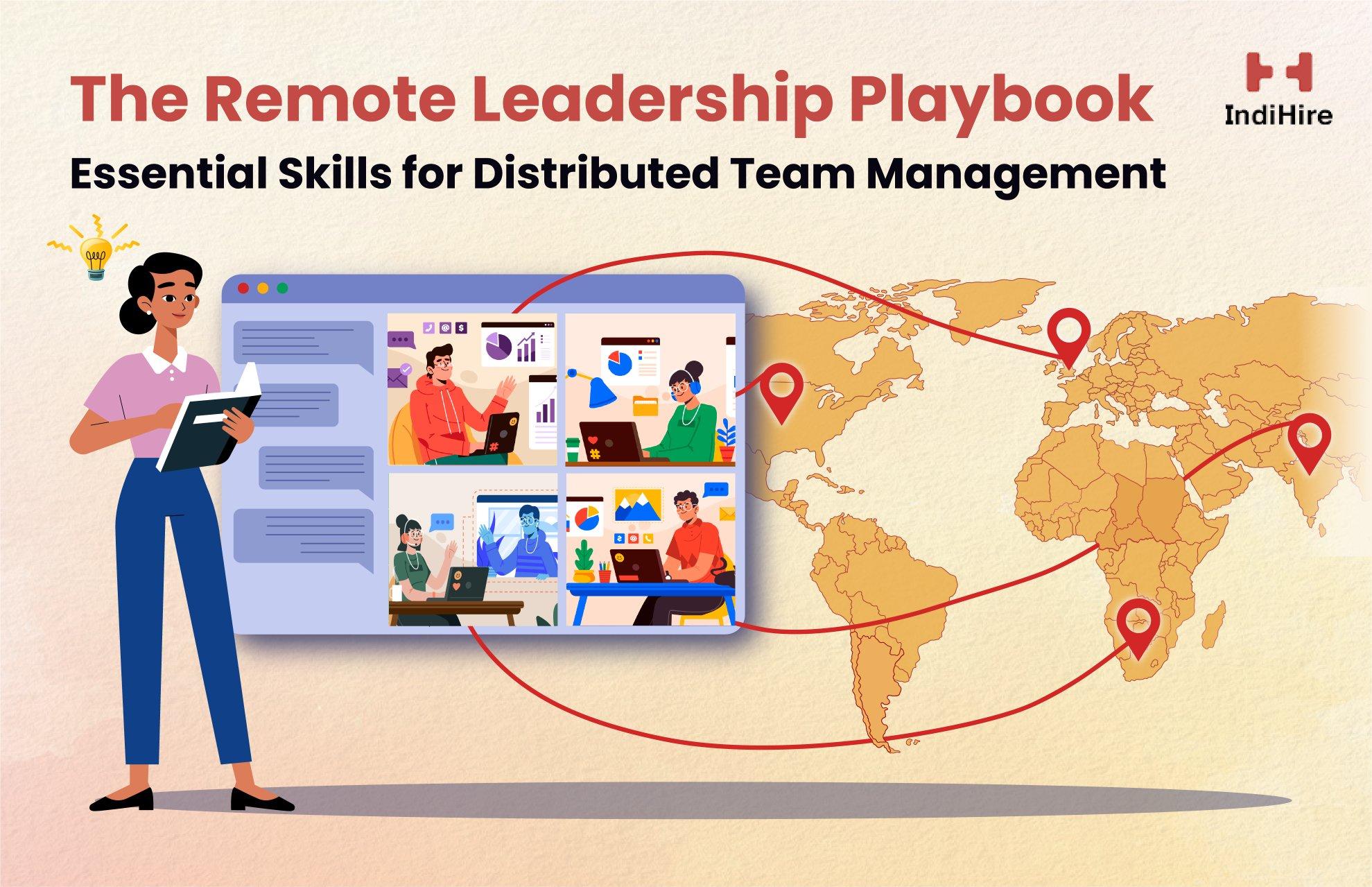
Let’s be honest – leading a remote team is not just about mastering Zoom or remembering to unmute before speaking. It is more like conducting an orchestra with musicians spread across New York, Tokyo, Toronto, Berlin, and Bangalore.
The whole game has changed. If you are still leading like everyone is sitting three desks away, you are basically trying to stream Netflix on dial-up internet. It might work, but nobody will enjoy the experience.
So, what separates the leaders who thrive in this distributed world from those who are merely surviving?
The Trust Paradox
Here’s the thing about remote leadership, trust does not build itself just because you hired good people. In a traditional office, trust develops organically; over coffee machine conversations, quick desk drop-bys, those random moments when you witness someone’s work ethic firsthand.
But remotely? You are essentially asking people to trust you through a screen. And you need to trust them to do excellent work when you cannot physically see them doing it.
The leaders who excel here understand that trust in a remote environment is intentional, not accidental.
You cannot rely on proximity to do the heavy lifting anymore. Instead, you need to create structured opportunities for connection, and we are not talking about those awkward “share a fun fact about yourself” icebreakers that make everyone want to fake a WiFi outage.
Think about it this way: when you lead remotely, you are managing relationships through intentional touchpoints. You need to be deliberate about checking in, not because you are micromanaging, but because you genuinely care about your team’s well-being and progress.
This means moving beyond status updates to actual conversations about challenges, aspirations, and sometimes just life stuff.
Communication Mastery: Speaking Multiple Languages
Ever noticed how the same message can land completely differently depending on whether it’s delivered via email, MS Teams, or video call?
Remote communication is not just about choosing the right medium; it is about understanding that written words lack tone, context, and those subtle facial expressions that prevent misunderstandings.
That casual comment you typed? Someone halfway across the world might read it at 2 AM and interpret it completely differently from what you intended.
Effective remote leaders become masters of over-communication, but the smart kind. Not the “reply-all to every email” kind. We are talking about clarity, context, and confirmation.
You need to develop a sixth sense for when something needs a video call versus a simple text message. You learn to paint pictures with words, to anticipate questions before they are asked, and to follow up without being that person who follows up on follow-ups.
And here’s a skill that sounds simple but trips up countless leaders: adapting your communication style to different cultures and personalities. Your direct, get-to-the-point approach might work brilliantly with your New York-based developer, but completely alienate your team member in Jaipur who values relationship-building and context.
Reading the Room When There Is No Room
Remember when you could tell someone was having a rough day just by their body language? Yeah, that is significantly harder when all you see is a tiny rectangle on your screen, assuming their camera is even on.
Remote leadership demands emotional intelligence at a level most in-office leaders never needed to develop.
You are essentially becoming a detective, picking up on subtle cues: the team member who is usually chatty but has gone quiet, the shift in someone’s writing tone, the person who is suddenly “having connection issues” every meeting.
This is not about being nosy or intrusive. It is about genuinely caring enough to notice when something is off and creating safe spaces for people to be human. Because here is what nobody talks about: remote work can be isolating. Really isolating. And as a leader, you might be the primary professional connection some team members have.
The best remote leaders build what we would call “psychological safety over distance”. They create environments where it is okay to say “I am struggling” or “I don’t understand” or “I need help” – without fear of judgment or career repercussions.
The Art of Asynchronous Everything
If you are still trying to coordinate schedules for every decision across five time zones, congratulations; you have just discovered the fastest path to burnout. Yours and everyone else’s.
Here’s where successful remote leaders separate themselves from the pack: they embrace asynchronicity like it is their job. Because, well, it is.
This means rethinking everything you know about collaboration. Instead of “let’s quickly jump on a call”, you learn to document decisions, create clear briefs, and provide context that allows people to contribute meaningfully as per their schedules. You become a curator of information, ensuring everyone has access to what they need when they need it.
Your team should not need to wait for you to wake up or finish a meeting to get unblocked. The information should be there, accessible, searchable, and clear.
This does not mean you never meet synchronously, some conversations demand real-time interaction. But you become surgical about when synchronous time is truly necessary versus when you are just defaulting to old habits.
Accountability Without Surveillance: The Fine Line
Let’s address the elephant in the virtual room: how do you ensure accountability when you cannot see people working?
Here’s a wild thought, maybe you never could. That person sitting at their desk from 9 to 5 could have been perfecting their fantasy football lineup while appearing busy. At least remote work forces us to measure what actually matters: outcomes, not activity.
The shift from presence-based to results-based leadership is non-negotiable in remote environments.
You need to get crystal clear on what success looks like, communicate it effectively, and then trust your team to achieve it in their own way. This requires you to develop new muscles: defining clear expectations, creating measurable milestones, and providing feedback that is specific and actionable.
And for everyone’s sanity, resist the urge to install surveillance software or demand constant status updates. Nothing kills trust faster than treating grown professionals like they are skipping detention.
Leading Across Borders & Backgrounds
Your distributed team is not just geographically diverse; it is a melting pot of cultures, work styles, communication preferences, and expectations about leadership itself.
What’s considered professional in one culture might be seen as cold and distant in another. The directness valued in Western business culture? It can come across as rude in many Asian cultures. The deference and hierarchy respected in some regions? It might frustrate team members from more progressive cultures.
Successful remote leaders develop genuine cultural curiosity and humility.
They learn about different holidays, communication norms, and work styles, not to become experts in every culture, but to show respect and adapt their approach.
This means asking questions, acknowledging your own cultural biases, and creating space for different perspectives to not just exist but thrive. It means recognizing that there is not one “right” way to work but there are multiple effective approaches that might look completely different from what you are used to.
The Bottom Line
Leading remote teams is not a watered-down version of traditional leadership; it is a completely different sport played on a completely different field. The leaders who win are those who embrace this reality instead of fighting it.
So, here is your challenge: which of these skills needs your attention first? Because let’s be real, nobody masters all this overnight. But the leaders who commit to developing these capabilities? They are not just surviving the remote work revolution. They are shaping it.
The question is not whether you can lead effectively from a distance. It is whether you are willing to do the work to get there. Your distributed team is waiting and they are watching to see what kind of leader you will become.


© 2026 IndiHire.