

When TA & Business Leaders Do Not Speak the Same Language
Reading Time: 5 min
Ever sat in a hiring kickoff meeting and quietly wondered if the hiring manager wants to hire a human being or a Swiss Army knife?
You know the JD. The “Senior Marketer” one. The requirements? Run paid ads. Write blogs. Manage SEO. Shoot reels. And somehow also present quarterly ROI decks to the board. That too for a salary that would not cover a mid-level analyst.
You already know how it ends: three months of searching, a shrinking candidate pipeline, and a business leader asking, “why is this role still open?”
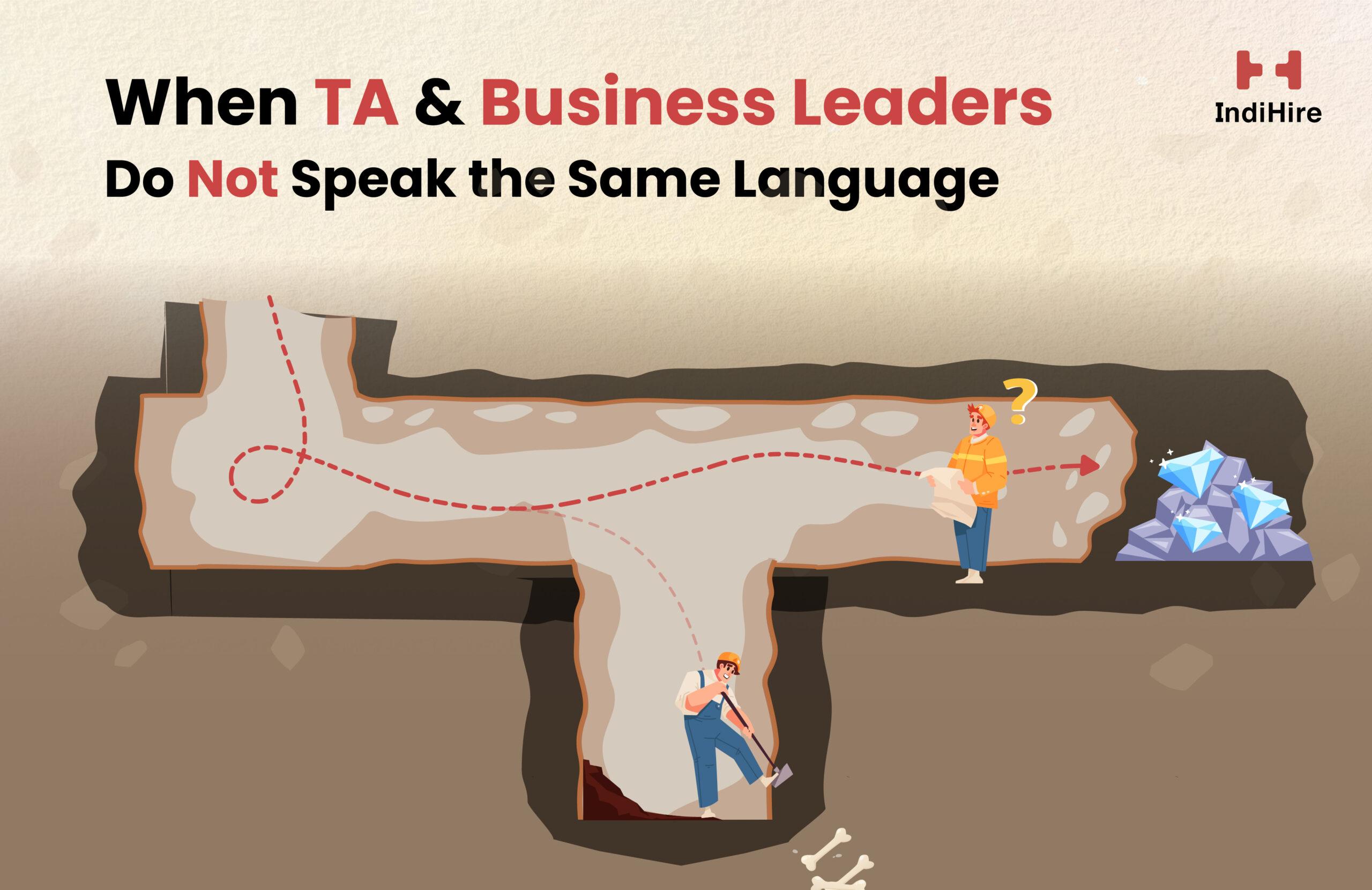
Well, this is not a hiring problem. It is a communication problem. And it is one of the most under-discussed tensions in the modern workplace – the quiet misalignment between TA teams and the business leaders they support.
The Recurring Pattern Nobody Wants to Name
Business leaders are not villains here. They are usually just optimists with deadlines. They see a gap in their team, picture the ideal version of the person who could fix it, and hand that wishlist to recruiters expecting magic.
The result? A few familiar patterns:
- The “one person, five job titles” role – where the JD is really a whole department squeezed into a single headcount.
- The compensation time-warp – offering 2019 salaries for 2026 skill sets.
- The invisible urgency – “we needed this yesterday,” announced today, for a role that has not even been budgeted properly.
- The moving target – requirements shifting mid-search because “we will know it when we see it.”
Funny in hindsight, painful in real time. Recruiters end up playing detective, therapist, and market analyst – often in the same call.
Why This Actually Happens
“Unrealistic expectations”, that’s what comes to mind. That’s true, but it is the surface. The deeper causes are structural.
TA is Rarely in the Strategy Room
Workforce decisions are often made in meetings where a recruiter is rarely present. By the time TA gets the brief, the role has already been shaped by assumptions. And the people who could have prevented those assumptions from forming were not in the room.
Business Leaders Benchmark Against Their Own Hiring History
If a leader hired a great generalist three years ago at a certain price point, that becomes their mental anchor. Markets shift. Skill scarcity shifts. Compensation benchmarks shift fast. Their memory does not.
There is No Shared Scoreboard
TA is often measured on speed and cost-per-hire. Business leaders are measured on team output and delivery. Nobody’s incentives are pointing at the definition of a good hire, so naturally, expectations drift apart.
Feedback Loops are Broken
When a hire does not work out, does that information reach the people writing the new job profile? Honestly, it happens, but once in a blue moon. So, the same unrealistic expectations get recycled, quietly, again and again. This missed opportunity for communication hurts more than anything else.
None of this is about anyone being difficult. It is about systems that were never designed to keep TA and business leadership in sync.
What is the Fix?
This is where recruiters have a genuine opportunity – not to push back, but to lead with data and become the translator between market reality and business ambition.
Here’s how that plays out in practice:
- Bring numbers, not opinions. Instead of saying “this budget is too low,” show current market compensation ranges for the role, pulled from real data. Numbers are far harder to argue with than gut feeling.
- Break the “unicorn” role into its real parts. If a JD demands five skill sets, map it out visually – show which parts belong to which function. You have to show that what they want is not an individual, but a team.
- Involve TA earlier in planning cycles. Advocate for a seat in workforce planning conversations, not just execution. A recruiter looped in at the idea stage can shape realistic expectations before a JD is even drafted.
- Create a shared success metric. Align on what “a good hire” looks like from day one – not just filled-in-30-days, but retained, ramped, and performing at 6 months.
- Close the feedback loop. After every hire (successful or not), share what worked and what did not with the business leader. Over time, this builds a shared, evolving understanding of what is realistic.
None of this requires conflict. It requires consistency – showing up, again and again, as the person in the room with the clearest view of the market.
From Order-Taker to Strategic Advisor
When business leaders think of TA, do they think “the people who fill my roles”, or “the people who help me build my team the right way”?
That distinction changes everything. The first version keeps recruiters reactive, chasing impossible briefs. The second positions TA as a genuine strategic partner – someone whose insight shapes hiring decisions before they go sideways.
Getting there is not about one big conversation. You must take small steps. Building trust through small, repeated moments. Sharing a salary benchmark before it is asked for. Flagging a scope issue early. Walking into a planning meeting with data already in hand.
Bringing It Together
Misalignment between TA and business leaders is not going away on its own – it is baked into how most organisations structure decision-making. But it is also entirely manageable, once you name it for what it is: a data and communication gap, not a personality clash.
So, the next time you are handed a JD that asks for a unicorn on a shoestring budget, do not just push back. Show up with the market data. The org chart logic. The calm confidence of someone who has seen this before.


© 2026 IndiHire.