The Repercussions of Falling Behind in AI Adoption in TA
Reading Time: 5 min
When was the last time you opened LinkedIn and did not see someone talking about AI? Your feed is basically one long infomercial for robots that write emails, screen resumes, and judge your candidates’ “culture fit” better than your senior recruiter with fifteen years of gut instinct.
We are not here to sell you on AI hype until you feel guilty enough to buy a subscription. We are here to talk about the stuff nobody really wants to say out loud – the quiet, slow-burning consequences of dragging your feet on AI adoption in talent acquisition. Not the obvious “you will be slower at hiring” stuff.
Your Best Recruiters Might Just Leave
AI adoption is not just about candidates. It is about your own people.
Think about it. Your recruiters did not sign up for a career of manually sifting through 400 resumes for a single mid-level role. They signed up to build relationships, sell your employer brand, and close great hires. When they are stuck doing repetitive admin work that a tool could do in seconds, resentment builds quietly.
And your competitors are offering that better experience internally. Better tools to work with, fewer redundant tasks, and more time to focus on what actually matters. So, while you are worried about losing candidates, you might be losing your own talent acquisition team to companies who have made their jobs less soul-crushing.
Another fact to keep in mind is – “Employee Experience” also applies to recruiters. They can represent your culture better when they truly experience, enjoy, and appreciate it in the workplace.
You are Building a Data Debt
Every day your competitors use AI in their hiring process, they are quietly building something you are not: a rich, structured pool of hiring data. Patterns on what makes a great hire, what messaging converts candidates, which channels actually work.
You, on the other hand, are still working off spreadsheets and gut feeling. And if something worked in 2019 does not mean it will also work today. The market is evolving; candidates’ expectations are changing, meaning you need to evolve too before it is too late.
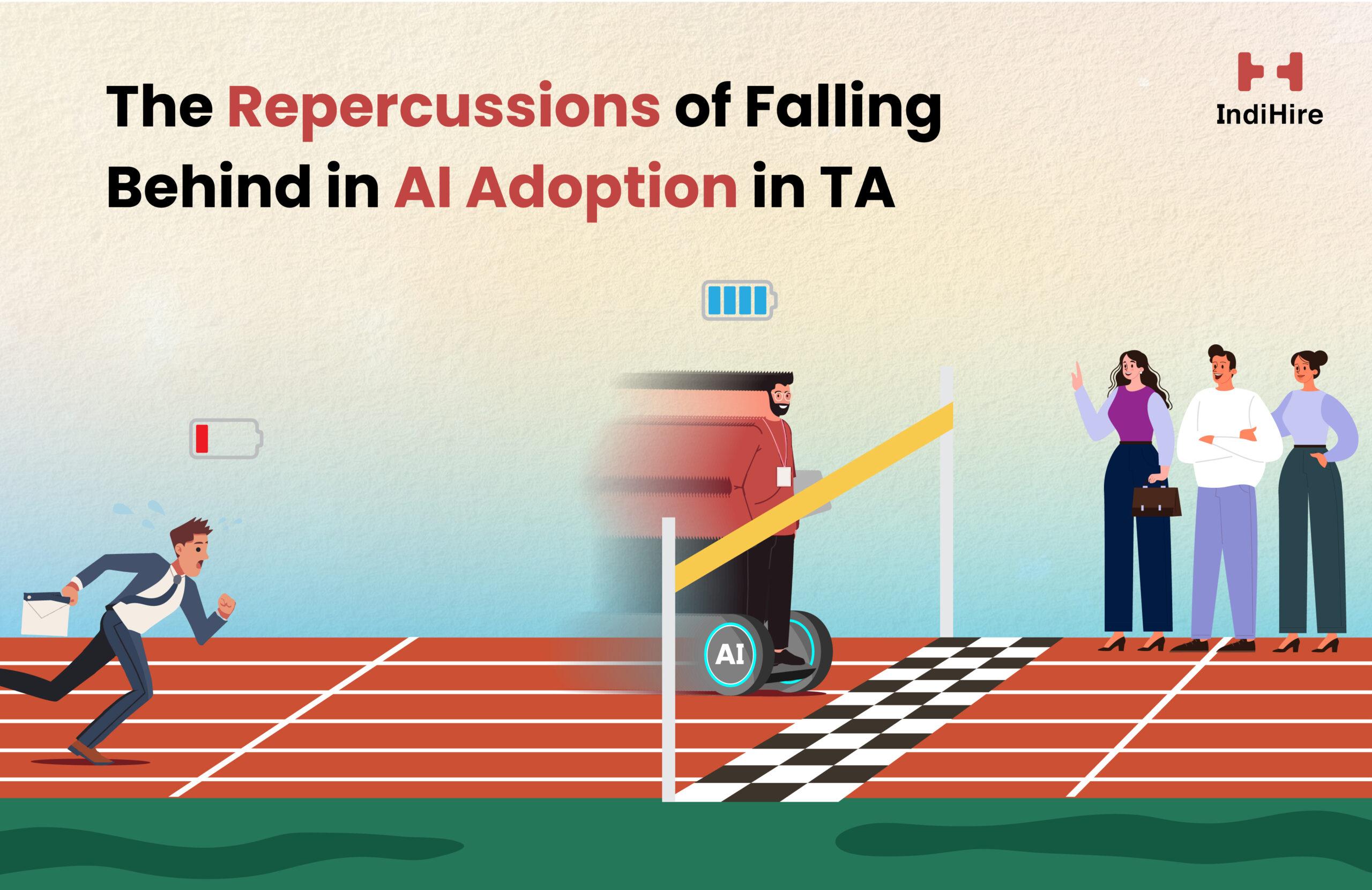
And if you are late to adopt AI (and trust us, you will have to eventually), you will be starting from scratch while your competitors are already three steps ahead with historical insight feeding their systems. It is like showing up to a marathon after everyone else already ran the first ten kilometres.
Candidates Notice. And They Talk.
We all know candidates hate slow hiring processes. But candidates also increasingly expect a certain level of intelligence in how companies engage them.
If a competitor sends a personalised, quick, thoughtful response within hours – and you take two weeks to even acknowledge an application – guess who looks outdated? It is not just about speed. It is about the vibe. Slow, clunky, impersonal hiring processes signal something about your company culture, whether that is fair or not.
And in the age of Glassdoor reviews and Reddit posts where candidates are increasingly sharing their hiring experiences with companies, you need to be the one praised by talent. Because today, perception spreads fast. Nobody wants to be the company people warn their friends about.
You Lose Your Voice During Strategy Meetings
TA leaders who fall behind on AI adoption often get left out of bigger strategic conversations.
Why? Because AI-driven TA functions generate insights leadership actually cares about – workforce planning data, skills-gap forecasting, predictive attrition trends. When you can walk into a boardroom with that kind of intelligence, you are not just “the hiring department” anymore. You are a strategic partner.
Fall behind, and you risk being seen as purely operational – a cost centre that fills seats, rather than a function shaping the company’s future. And once that perception sets in, it is genuinely hard to change.
The Vendor Relationship Problem
Here’s a little secret from the world of HR tech: early adopters often get a say in how tools evolve. They become design partners, beta testers, and priority accounts. Late adopters? You get the finished product, take it or leave it, with way less influence over the roadmap.
So, while everyone else has been shaping AI recruitment tools to fit their needs for the past couple of years, you will be adapting your processes to fit whatever’s left on the shelf.
What Now?
Nobody is saying you need to overhaul your entire TA function overnight and integrate AI into everything just to keep up appearances. That’s how you end up with half-baked tools nobody trusts.
But sitting on the sidelines is not a neutral choice anymore – it is an active decision with real costs. Costs to your talent pipeline, your recruiters’ morale, your data foundation, and your seat at the leadership table.
The companies that will struggle most in the next few years will not be the ones who adopted AI imperfectly. They will be the ones who waited so long that catching up became its own full-time job.


© 2026 IndiHire.