The TA Dilemma – Budget Constraints vs Business Expectations
Reading Time: 5 min
You found them – the Unicorn. The candidate who nails the technical round, gets your culture without you having to explain it twice, and actually seems excited to join your team.
And then it happens. You start the compensation talks and the numbers – they just do not work. The budget you were handed three months ago suddenly feels like a cruel joke.
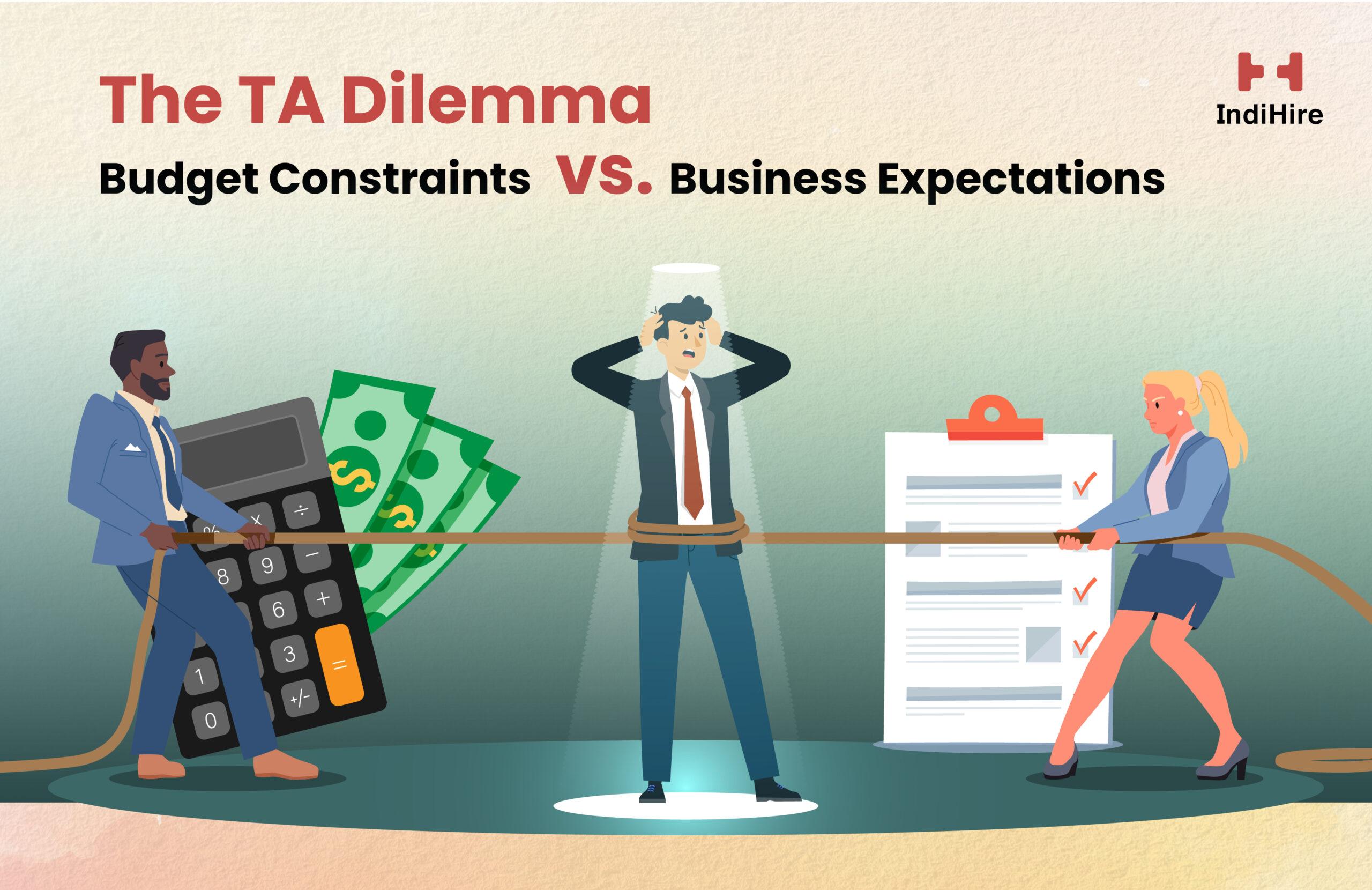
Welcome to the single most exhausting rerun in Talent Acquisition: budget constraints vs business expectations. Leadership wants top-tier talent. Finance wants top-tier savings. And you? You are stuck in the middle, holding a job description that promises the moon and a budget that barely covers a decent telescope.
Here’s the thing, though. Everyone talks about this problem. Almost nobody talks about why it keeps happening – or what to actually do about it.
The Problem is Not the Budget
Most TA teams treat this as a negotiation problem. It is not. It is a planning problem wearing a negotiation costume.
By the time you are haggling over ₹2 lakhs or $5,000 with a candidate, the real mistake already happened – weeks or months earlier, when the budget was set without checking it against the market.
Ask yourself honestly: when was the last time compensation benchmarking happened before the requisition was approved, not after the candidate said yes?
If the answer is “rarely”, you have found your root cause.
Why This Keeps Happening
A few uncomfortable truths, served without sugar-coating:
- Budgets are set once a year. Markets move every quarter. By the time Q3 rolls around, that “competitive” number from January is ancient history.
- Job descriptions are written by hiring managers who dream in ideal candidates, not in salary bands. The wish list gets longer while the budget stays flat.
- HR and Finance often operate in parallel universes. Finance approves headcount cost. TA translates that into market reality. When these two do not sync regularly, someone always loses – usually you, mid-negotiation.
- “We will figure it out when we find the right person” is not a strategy. It is a hope. And hope, as we know, is not a hiring plan.
None of this is anyone’s fault, exactly. It is just what happens when budgeting and hiring live on different calendars.
The Two Instinctive Reactions
When you hit the wall, there are usually two moves to be made.
Negotiate the Candidate Down
Tempting, but risky. You might get the “yes”, but you are starting the relationship by asking someone to accept less than their worth. That memory does not fade – it just waits quietly until their first performance review or the next recruiter’s cold email lands in their inbox.
Go Back to Leadership and Ask for More Budget
Also tempting. Also risky – because if you do this every single time, you slowly stop being seen as a strategic partner and start being seen as the department that always needs “just a bit more”. Credibility is hard to rebuild once it is chipped away role by role.
Both moves treat the symptom. Neither fixes the disease.
Building the Fix Before You Need It
Here’s where we stop reacting and start eliminating the problem out of existence.
1. Budget-Role Alignment Before the Search Even Opens
Before a job requisition is approved, TA should sit in the room – not just receive the memo. A five-minute sanity check against current market data can save weeks of painful back-and-forth later. As we can all agree, prevention is better than cure.
2. Build Flexibility Bands, Not Fixed Numbers
Instead of a single fixed budget, propose a range – a floor, a target, and a stretch ceiling for truly exceptional talent. This gives hiring managers room to move without a fresh approval cycle every time someone impressive walks in.
3. Make Benchmarking a Habit, Not an Event
Compensation data should not be pulled out only when a deal is about to collapse. Quarterly benchmarking – even a light-touch version – keeps your numbers honest and your negotiations painless.
4. Turn TA-Finance Meetings into a Ritual, Not a Rescue Mission
If the only time Finance hears from TA is during a budget crisis, that relationship will always feel adversarial. Regular, low-stakes check-ins build the trust you will need when you do have to ask for flexibility.
5. Sell Total Rewards, Not Just the Base Number
Salary is one line in a much bigger story – growth path, flexibility, learning budgets, ESOPs, the actual work itself. When base pay is tight, a well-articulated total rewards conversation can bridge a surprising amount of ground, without touching the budget at all.
Already Stuck in the Dilemma?
Sometimes prevention comes too late, and you are already staring at the gap. When that happens:
- Have an honest conversation with the hiring manager first, not the candidate. Is there any flexibility – a signing bonus, an accelerated review cycle, a role-scope adjustment?
- Explore non-monetary levers before touching the number itself: flexible working arrangements, faster growth trajectory, a title adjustment that reflects real scope.
- Set a time-box on the decision. Endless back-and-forth signals disorganisation, not diligence. Give yourself and the candidate a clear, respectful deadline.
- Know when to walk away. Not every gap can or should be closed. Overextending the budget for one exceptional hire can quietly break your internal pay equity – and that is a headache that outlasts any single req.
The Real Takeaway
The TA dilemma is not really about candidates or budgets. It is about how early or how late – the conversation happens. Teams that treat compensation planning as a living, ongoing process rarely find themselves cornered at the offer stage. Teams that treat it as a once-a-year formality? They live in this dilemma on repeat.
So, here is the question worth sitting with: is your team reacting to the budget-expectation gap every quarter, or actively closing it before it opens?
If it is the former, maybe it is time to rethink the process – and start the conversation before the next unicorn candidate walks through the door.


© 2026 IndiHire.